

Forecast change in the AI era
Canada is in the midst of a major technological revolution in artificial intelligence (AI), one that is transforming the practice of law, delivery of legal services, and access to justice. Join the AI and Law Intensive from Queen’s Law to gain insights on AI governance, legal compliance, and global collaboration to propel your career.
One-week e-learning program for professionals
Designed for non-lawyers and lawyers alike, the AI and Law Intensive bridges theory and practice to give participants a foundational understanding of AI in the context of Canadian law. Taught by top researchers and experts in the legal AI field, participants will learn strategies and best practices for the responsible use of AI tools as well as explore key concepts related to the governance and regulation of AI, intellectual property, data privacy, and the risks and opportunities that lie ahead in, for example, the management of human resources, administrative law, health law, and more.
Course Details:
June 1st – 5th, 2026
Delivered Online
Cost: $2,300.00
Please note that registration for this intensive is now closed. Join the waitlist to stay informed about upcoming Professional Intensives from Queen’s Law and be the first to know when registration opens.
Law Society of Ontario CPD Accreditation:
- This program contains 4 hour(s) and 0 minutes of Professionalism Content
- This program contains 24 hour(s) and 0 minutes of Substantive Content
Got questions about the AI and Law Intensive? Contact us lawprofessionalcertificates@queensu.ca
Interested in this intensive?
Receive course details, information on upcoming events, and registration updates for Queen’s Law Professional Intensives.
Testimonial
“I would highly recommend the Queen’s AI and Law Intensive to anyone seeking to stay at the forefront of technological and legal developments. The program’s interdisciplinary approach equips you not only with a solid understanding of AI’s impact on legal practice but also with the tools to anticipate and address future challenges in the field of law. It’s an investment that will deepen your expertise and broaden your perspectives, making you a more effective and innovative leader.”
Clyphendie Pierre-Louis
Director General, Services to Business Branch, Canadian Intellectual Property Office


Experts including:
Colleen M. Flood - Dean, Queen's University Faculty of Law
Dr. Flood is the Dean of the Faculty of Law at Queen’s University and holds a Doctor of Juridical Science (SJD) and Master of Laws (LLM) from the University of Toronto and a Bachelor of Laws (LLB) Honours from the University of Auckland, New Zealand. Her research informed national and global debates over privatization, health system design, accountability, governance, and the role of courts in defending rights in health care.
 Teresa Scassa - Faculty Member University of Ottawa
Dr. Scassa is the Canada Research Chair in Information Law and Policy, a Faculty member at the Centre for Law, Technology and Society, and a Full Professor in the Faculty of Law, Common Law Section at the University of Ottawa, with cross-appointment to the School of Information Studies. Her research explores the intersection of AI and law, data governance, intellectual property, data privacy, and legal issues arising from emerging technologies.
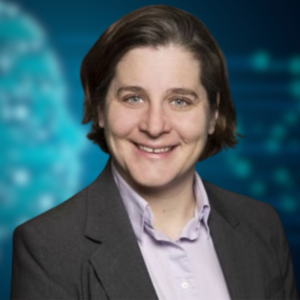 Amy F. Salyzyn - Associate Professor in the Faculty of Law at the University of Ottawa
Dr. Amy Salyzyn is a Faculty member at the Center for Law, Technology and Society, and an Associate Professor in the Faculty of Law, Common Law Section at the University of Ottawa. Dr. Salyzyn received her J.S.D. and LL.M. from Yale Law School, and her J.D. from the University of Toronto Law School. She is an expert in the area of legal ethics, lawyer regulation, the use of technology in the delivery of legal services, and access to justice.
 Bita Amani - Associate Professor Queen's University
Dr. Bita Amani is an associate professor at Queen’s Law and co-director of Feminist Legal Studies. Her research focuses on intellectual property law, policy, innovation and sustainable development, regulating new technologies, biopiracy and protection of traditional and cultural knowledge, regulatory issues in medical/scientific research and its commercialization, privacy and data protection, regulatory diversity, feminist and critical legal studies.
 Samuel Dahan - Associate Professor Queen's University
Dr. Dahan is an associate professor at Queen’s Law and an adjunct professor at Cornell Law School and holds a doctorate from the University of Cambridge. He is leading the development of MyOpenCourt and OpenJustice, two AI legal systems, the Director of the Conflict Analytics Lab, a consortium for AI research on law and conflict resolution, and the Chief of Policy at Deel and the Chair of the Deel Lab for Global Employment, a policy institute on global work.
 Paul Daly - Chair in Administrative Law and Governance
Dr. Daly is a faculty member at the Centre for Law, Technology and Society, the University Research Chair in Administrative Law and Governance, and an Associate Professor in the Faculty of Law, Common Law Section at the University of Ottawa. Dr. Daly examines the relationship between the administrative state, individuals and the courts, the role of artificial intelligence in administrative law, and the nature of legal controls on public power exercised by private entities.
 Carys Craig - Associate Professor Osgoode Faculty of Law
Dr. Carys Craig is a member of the Osgoode Faculty of Law, Academic Director of the Osgoode Professional Development LLM Program in Intellectual Property, and Director of IP Osgoode. Her research is in the fields of domestic, comparative and international intellectual property law and policy, with an emphasis on public interest theory and the public domain, and her award-winning work has been cited with approval by the Supreme Court of Canada.
 Bryan Thomas - Research Fellow, Queen's University Faculty of Law
Dr. Thomas is a Senior Research Fellow with Faculty of Law, Queen's University, and holds an SJD from University of Toronto, a BCL/LLB from McGill Law, and a master's degree in philosophy from Dalhousie. His research spans a wide range of topics including Canadian and comparative health law and policy, health rights litigation, long-term care, global health law, the regulation of health AI, and the role of religious argument in legal and political discourse.
 George R. Wray - Partner, Borden Ladner Gervais LLP (BLG)
George is a distinguished litigator and strategic advisor in product law, known for delivering sophisticated solutions to complex regulatory and risk management challenges. From ensuring compliance in labeling and advertising to guiding through recalls and safety concerns, George’s nuanced understanding of the law empowers clients to launch and sustain products in the Canadian market with confidence.
Full bios available further down this page.
Intensive at a glance



What you will learn
This week-long virtual e-learning program will help you gain a practical understanding of how machine-based learning and generative AI are rapidly shaping legal operations in all aspects of Canadian society. Taught by interdisciplinary experts who are at the forefront of change, the Queen’s Law AI and Law Intensive will help you:
- Strengthen your AI literacy around emerging technological developments, policy and regulatory implications, and risks and opportunities posed by AI.
- Understand how you can leverage legal AI to drive cultural change in your organization to remain agile in the AI era.
- Accelerate your professional development objectives and stand out in a changing marketplace.
- Discover how to maximize AI to better engage customers, stakeholders, clients, and key audiences.
Who should attend
This virtual e-learning program is designed for all learners. No prior experience or legal training is required. A short introductory module will be provided to participants with no legal background to familiarize them with key legal concepts and terminology that will be covered in the course.
The AI and Law Intensive is for learners from diverse professional backgrounds, sectors and disciplines. Whether you work in government policy development, non-profit administration, private or in-house legal practice, academia and research, start-up or large-scale business, there is something in this course for you.
Fees
The fee for the 2026 AI and Law Intensive is $2,300 (CAD) plus HST, and is payable upon acceptance of an offer of admission.
Are you part of a larger organization, non-profit, NGO or educational organization? Discounts are available: contact lawprofessionalcertificates@queensu.ca for details.
Registration Process
- Click HERE to register for the course and submit payment.
- Please send a bio and/or professional CV to Lawprofessionalcertificates@queensu.ca to be shared with course instructors and participants.
Schedule
| Schedule | Speaker | Topic |
|---|---|---|
Mon AM (9 AM – 12 PM) | George Wray | Regulatory Landscape |
Monday PM (1 – 4 PM) | Samuel Dahan (PhD), Director of Conflict Analytics Lab & Associate Professor (Queen’s Law) | Artificial Intelligence & the Future of Work *Note: Repeat of Interview & 1-hour Q&A |
Tues AM (9 AM – 12 PM) | Teresa Scassa (SJD), Canada Research Chair in Information Law and Policy & Professor (uOttawa Law) | Keep it Secret/Keep it Safe: Privacy, Data Governance & AI |
| Tues PM (1 – 4 PM) | Amy Salyzyn (SJD), Associate Professor (uOttawa Law) | The Ethical Lawyer & The AI Machine |
Wed AM (9 AM – 12 PM) | Paul Daly (PhD), Chair in Administrative Law and Governance (uOttawa Law) | AI and Admin Law / Accountability |
Wed PM (1 – 4 PM) | Bita Amani (SJD), Associate Professor (Queen’s Law) & Jake Effoduh, Assistant Professor (Lincoln Alexander School of Law) | Algorithmic Bias Panel/Interview: Name TBD |
Thurs AM (9 AM – 12 PM) | Carys Craig (SJD), Academic Director of the Osgoode Professional Development LLM Program in Intellectual Property Law & Associate Professor (Osgoode Hall Law) | Copyright, Art-AI and All That Jazz |
Thurs PM (1 – 4 PM) | Dr. Robin Whitehead (Lakehead) | AI & Criminal Law |
Fri AM (9AM – 12 PM | Colleen M. Flood (SJD), Dean of the Faculty of Law (Queen’s Law) & Melanie de Witt | Machine MD |
Fri PM (1 – 4 PM) | Open/Buffer/Capstone |
Content Experts
Colleen M. Flood
Dean, Queen's University Faculty of Law
Colleen M. Flood is the Dean of the Faculty of Law at Queen’s University. She served as a professor and the Canada Research Chair for the University of Toronto’s Faculty of Law from 2000-2014 and as the inaugural director of the Centre for Health Law, Policy and Ethics and University of Ottawa Research Chair in Health Law & Policy from 2014-2023. Dr. Flood holds a Doctor of Juridical Science (SJD) and Master of Laws (LLM) from the University of Toronto and a Bachelor of Laws (LLB) Honours from the University of Auckland, New Zealand. Her research informed national and global debates over privatization, health system design, accountability, governance, and the role of courts in defending rights in health care.
Her latest research focuses on the governance of health-related artificial intelligence. She holds many honours and accomplishments, including being named a Justice Emmet Hall Laureate in 2022, and member of the Canadian Council of Academies Scientific Advisory Committee in 2021, and a member of the Royal Society Taskforce on COVID-19 in 2021. She has over 100 publications and over 1200 citations, including publications on implementing digital passports for COVID-19 immunizations, vaccine ins and outs, the legal issues that have been raised in the presence of COVID-19, and accounts of what our country could look like post-pandemic.
Teresa Scassa
Faculty Member University of Ottawa
Dr. Teresa Scassa is the Canada Research Chair in Information Law and Policy, a Faculty member at the Centre for Law, Technology and Society, and a Full Professor in the Faculty of Law, Common Law Section at the University of Ottawa, with cross-appointment to the School of Information Studies.
Dr. Scassa’s research explores the intersection of law and technology. She has written widely about intellectual property and privacy law issues in a broad range of contexts. Her ongoing research projects are on artificial intelligence and the law, data governance, data privacy, and legal dimensions of data scraping. Dr. Scassa’s published works include Artificial Intelligence and the Law in Canada (LexisNexis 2021).
She is a member of Canada’s Advisory Council on Artificial Intelligence, a member of the Law Commission of Ontario’s Advisory Panel on the AI in Civil and Administrative Justice Project, and currently sits on two data policy-related working groups in Ontario. She is a past member of the Canadian Government Advisory Panel on Open Government and of the External Advisory Committee to the Privacy Commissioner of Canada. Dr. Scassa earned her LL.B. in Common and Civil Law from McGill University, and her LL.M. and SJD in Law from the University of Michigan.
Amy F. Salyzyn
Associate Professor in the Faculty of Law at the University of Ottawa
Dr. Amy Salyzyn is a Faculty member at the Center for Law, Technology and Society, and an Associate Professor in the Faculty of Law, Common Law Section at the University of Ottawa. She is an expert in the area of legal ethics, lawyer regulation, the use of technology in the delivery of legal services, and access to justice.
Dr. Salyzyn is also the President of the Canadian Association for Legal Ethics. She has also served as co-chair of the board of the National Association of Women and the Law and as a “Learned Counsel Advisor” for the National Association of Bar Counsel (US), Entity Regulation Committee.
Before coming to the University of Ottawa, Dr. Amy Salyzyn served as a judicial law clerk at the Court of Appeal for Ontario and practiced at a Toronto litigation boutique. Dr. Salyzyn received her J.S.D. and LL.M. from Yale Law School, and her J.D. from the University of Toronto Law School, where she was awarded the Dean’s Key upon graduation.
Bita Amani
Associate Professor Queen's University
Dr. Bita Amani is an associate professor at Queen’s Law and co-director of Feminist Legal Studies Queen’s.
Professor Amani teaches courses in intellectual property, information privacy, and feminist legal studies (workshop). She is currently working on a number of issues related to food law and governance, intellectual property, algorithmic error and privacy law. Dr. Amani served briefly as a legislative drafter for, the Ministry of the Attorney General (Ontario), Office of the Legislative Counsel (37th Legislative Session, 2001).
Dr. Amani’s research is focused on intellectual property law, policy, innovation and sustainable development, regulating new technologies (from biotech to AI/robotics), biopiracy and protection of traditional and cultural knowledge, regulatory issues in medical/scientific research and its commercialization, privacy and data protection, regulatory diversity, feminist and critical legal studies.
Samuel Dahan
Associate Professor Queen's University
Samuel Dahan is an associate professor at Queen’s Law and an adjunct professor at Cornell Law School. He is the Director of the Conflict Analytics Lab, a consortium for AI research on law and conflict resolution, and the Chief of Policy at Deel and the Chair of the Deel Lab for Global Employment, a policy institute on global work. Dahan served as a Cabinet Minister (Referendaire) at the Court of Justice of the European Union and Policy Advisor at the EU Commission.
Dahan is leading the development of MyOpenCourt and OpenJustice, two AI legal systems. Dahan’s research has been published in such journals as the International Journal of Economic Law; McGill Law Journal; European Labour Law Journal; Industrial Law Journal; Journal of Law and AI; AAAI; and ICML. His work has been featured in Business Insider, Global News, Bloomberg, Semafore, Børsen and HR.com.
Dahan holds a doctorate from the University of Cambridge. He has studied law and dispute resolution at Harvard Law School; the Ecole Normale Supérieure (ENS-Ulm); the Sorbonne; Leuven University in Belgium; and the University of Nice.
Paul Daly
Chair in Administrative Law and Governance
Dr. Paul Daly is a faculty member at the Centre for Law, Technology and Society, the University Research Chair in Administrative Law and Governance, and an Associate Professor in the Faculty of Law, Common Law Section at the University of Ottawa.
Under his Research Chair in Administrative Law and Governance, Professor Daly’s work examines the relationship between the administrative state, individuals and the courts, the role of artificial intelligence in administrative law, and the nature of legal controls on public power exercised by private entities.
Dr. Daly’s academic work has regularly been cited by Canadian courts and administrative tribunals—his award-winning blog, Administrative Law Matters, was the first ever blog cited by the Supreme Court of Canada.
Carys Craig
Associate Professor Osgoode Faculty of Law
Dr. Carys Craig is a member of the Osgoode Faculty of Law, Academic Director of the Osgoode Professional Development LLM Program in Intellectual Property, and Director of IP Osgoode. Dr. Craig teaches JD and graduate courses in Copyright Law, Trademark Law, and International Aspects of Intellectual Property, as well as seminars on Intellectual Property Theory and Copyright in the Digital Era.
She researches and publishes in the fields of domestic, comparative and international intellectual property law and policy, with an emphasis on public interest theory and the public domain. Her recently published monograph, Copyright, Communication & Culture: Towards a Relational Theory of Copyright Law (Northampton, MA: Edward Elgar Press, 2011) critically examines the assumptions of possessive individualism embedded in modern copyright law. Her award-winning work has been cited with approval by the Supreme Court of Canada.
Dr. Craig holds a First Class Honours Bachelor of Laws (LLB Hons) from the University of Edinburgh in Scotland, a Master of Laws (LLM) from Queen’s University in Kingston, Ontario, and a Doctorate in Law (SJD) from the University of Toronto, where she was a graduate fellow of the Centre for Innovation Law and Policy.
Bryan Thomas
Research Fellow, Queen's University Faculty of Law
Bryan Thomas is a Senior Research Fellow with Faculty of Law, Queen's University. His research spans a wide range of topics including Canadian and comparative health law and policy, health rights litigation, long-term care, global health law, the regulation of health AI, and the role of religious argument in legal and political discourse. Dr. Thomas holds an SJD from University of Toronto, a BCL/LLB from McGill Law, and a Master’s degree in philosophy from Dalhousie.
George R. Wray
Partner, Borden Ladner Gervais LLP (BLG)
George is a distinguished litigator and strategic advisor in product law, known for delivering sophisticated solutions to complex regulatory and risk management challenges. His clients—spanning sectors like automotive, life sciences and healthcare, food and beverage, natural health products, agri-business, medical devices, and emerging tech such as AI—rely on his insight to navigate high-stakes legal issues. From ensuring compliance in labeling and advertising to guiding through recalls and safety concerns, George’s nuanced understanding of the law empowers clients to launch and sustain products in the Canadian market with confidence.